


|
|
|

2-4
30'
14
Aucun texte nécessaire dans le jeu
|
Atlantis: Island of Gods
Éditeur: REDIMP GAMES
 Voulez-vous vendre votre copie de ce jeu ?

Utilisez notre marché utrade !
Atlantis: Island of Gods

PHOTOS SUR BGG
Ces photos sont la propriété de boardgamegeek.com et ne font pas spécifiquement référence à l'édition présentée sur cette page.


 Bundle avec manches
- Cartes 78 (57.5mmx88.0mm)
- Cartes 4 (147.0mmx104.5mm)

=
23,14€
Plein tarif
21,80€
=
25,38€
Plein tarif
24,60€
=
25,38€
Plein tarif
24,60€
 Pochettes de cartes dans ce jeu
78 cartes de 57.5mm de largeur et 88.0mm de hauteur
2x
(50 Pièces)

2x
(50 Pièces)
1x
(100 Pièces)

1x
(100 Pièces)

1x
(100 Pièces)

1x
(110 Pièces)

2x
(55 Pièces)

2x
(75 Pièces)

2x
(50 Pièces)

2x
(75 Pièces)

1x
(100 Pièces)

1x
(100 Pièces)

4 cartes de 147.0mm de largeur et 104.5mm de hauteur
Il n'y a pas de pochettes disponibles correspondant à cette taille de carte
 Descriptif
Before the civilizations that we know of there was a great island, called by contemporary scientists Atlantis. It was inhabited by a civilization that had extraordinary cultural and technological achievements, especially in architecture and art.
All that wouldn’t have been possible if they hadn’t been blessed by the gods, who the Atlants honored by building glorious monuments for them. And the gods didn’t mind that they weren’t the only ones being cherished by the Atlants. Alas, the plan of the gods was not perfect. Things went awry because of the younger generation of the gods.
Specifically it was Ares, the son of Zeus and Hera, whose actions resulted in the disaster. His wickedness was endless, and the cruelty of his followers and the destruction they caused initiated civil war in the land that had only known peace. The emerged conflict divided both the Atlants and their deities. Before those events, the gods had taken pleasure in watching their folk grow, but then they started to interfere with the people’s affairs as well as fight one another. Some of the old gods had predicted that this civilization would eventually collapse due to the ever growing conflict between the deities. Conflict in which people’s lives would mean nothing.
So, they decided to protect their followers by sending numerous visions to their priests or by taking a human form and acting as prophets. They would warn Atlants that the end was nigh and tell them about distant lands that could be their only hope for survival.
Rage of the gods kept growing until one day the eldest one, Nammu, the creator of the primeval sea, in her despair decided to end the Atlants’ suffering by sinking the island. With the help of their gods some of the Atlants managed to survive. They arrived at various parts of the world, bringing their knowledge to the cultures emerging there.
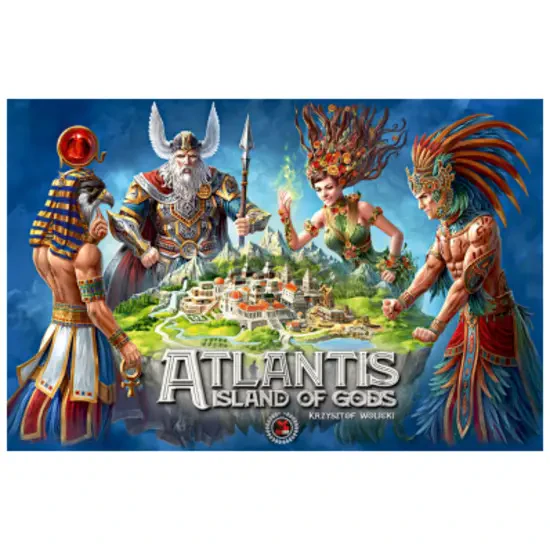
In Atlantis: Island of Gods players are the highest priests of the mythological gods, for whom they erect monuments on the mythical island of Atlantis right before its doom. It's a logical card game with four boards representing the regions of Atlantis.
Each turn, players take five actions during which they can recruit new followers of their deity, celebrate feasts in their honor, and build new temples. The goal of the game is to be the first to build all the temples of the player's deity which grants them god's favor and survival of the imminent catastrophe.
All that wouldn’t have been possible if they hadn’t been blessed by the gods, who the Atlants honored by building glorious monuments for them. And the gods didn’t mind that they weren’t the only ones being cherished by the Atlants. Alas, the plan of the gods was not perfect. Things went awry because of the younger generation of the gods.
Specifically it was Ares, the son of Zeus and Hera, whose actions resulted in the disaster. His wickedness was endless, and the cruelty of his followers and the destruction they caused initiated civil war in the land that had only known peace. The emerged conflict divided both the Atlants and their deities. Before those events, the gods had taken pleasure in watching their folk grow, but then they started to interfere with the people’s affairs as well as fight one another. Some of the old gods had predicted that this civilization would eventually collapse due to the ever growing conflict between the deities. Conflict in which people’s lives would mean nothing.
So, they decided to protect their followers by sending numerous visions to their priests or by taking a human form and acting as prophets. They would warn Atlants that the end was nigh and tell them about distant lands that could be their only hope for survival.
Rage of the gods kept growing until one day the eldest one, Nammu, the creator of the primeval sea, in her despair decided to end the Atlants’ suffering by sinking the island. With the help of their gods some of the Atlants managed to survive. They arrived at various parts of the world, bringing their knowledge to the cultures emerging there.
In Atlantis: Island of Gods players are the highest priests of the mythological gods, for whom they erect monuments on the mythical island of Atlantis right before its doom. It's a logical card game with four boards representing the regions of Atlantis.
Each turn, players take five actions during which they can recruit new followers of their deity, celebrate feasts in their honor, and build new temples. The goal of the game is to be the first to build all the temples of the player's deity which grants them god's favor and survival of the imminent catastrophe.
 Informations supplémentaires
| Mécanique: | Rédaction de cartes Gestion des mains |
| Catégories: | Historique Fantaisie Miniatures Historique Thème |
| Noms alternatifs: | |
| BARCODE: | ????????? |
| Cela a été vu 2312 fois | |
Bundle avec manches
- Cartes 78 (57.5mmx88.0mm)
- Cartes 4 (147.0mmx104.5mm)
=
23,14€
Plein tarif
21,80€
=
25,38€
Plein tarif
24,60€
=
25,38€
Plein tarif
24,60€
Descriptif
Before the civilizations that we know of there was a great island, called by contemporary scientists Atlantis. It was inhabited by a civilization that had extraordinary cultural and technological achievements, especially in architecture and art.
All that wouldn’t have been possible if they hadn’t been blessed by the gods, who the Atlants honored by building glorious monuments for them. And the gods didn’t mind that they weren’t the only ones being cherished by the Atlants. Alas, the plan of the gods was not perfect. Things went awry because of the younger generation of the gods.
Specifically it was Ares, the son of Zeus and Hera, whose actions resulted in the disaster. His wickedness was endless, and the cruelty of his followers and the destruction they caused initiated civil war in the land that had only known peace. The emerged conflict divided both the Atlants and their deities. Before those events, the gods had taken pleasure in watching their folk grow, but then they started to interfere with the people’s affairs as well as fight one another. Some of the old gods had predicted that this civilization would eventually collapse due to the ever growing conflict between the deities. Conflict in which people’s lives would mean nothing.
So, they decided to protect their followers by sending numerous visions to their priests or by taking a human form and acting as prophets. They would warn Atlants that the end was nigh and tell them about distant lands that could be their only hope for survival.
Rage of the gods kept growing until one day the eldest one, Nammu, the creator of the primeval sea, in her despair decided to end the Atlants’ suffering by sinking the island. With the help of their gods some of the Atlants managed to survive. They arrived at various parts of the world, bringing their knowledge to the cultures emerging there.
In Atlantis: Island of Gods players are the highest priests of the mythological gods, for whom they erect monuments on the mythical island of Atlantis right before its doom. It's a logical card game with four boards representing the regions of Atlantis.
Each turn, players take five actions during which they can recruit new followers of their deity, celebrate feasts in their honor, and build new temples. The goal of the game is to be the first to build all the temples of the player's deity which grants them god's favor and survival of the imminent catastrophe.
All that wouldn’t have been possible if they hadn’t been blessed by the gods, who the Atlants honored by building glorious monuments for them. And the gods didn’t mind that they weren’t the only ones being cherished by the Atlants. Alas, the plan of the gods was not perfect. Things went awry because of the younger generation of the gods.
Specifically it was Ares, the son of Zeus and Hera, whose actions resulted in the disaster. His wickedness was endless, and the cruelty of his followers and the destruction they caused initiated civil war in the land that had only known peace. The emerged conflict divided both the Atlants and their deities. Before those events, the gods had taken pleasure in watching their folk grow, but then they started to interfere with the people’s affairs as well as fight one another. Some of the old gods had predicted that this civilization would eventually collapse due to the ever growing conflict between the deities. Conflict in which people’s lives would mean nothing.
So, they decided to protect their followers by sending numerous visions to their priests or by taking a human form and acting as prophets. They would warn Atlants that the end was nigh and tell them about distant lands that could be their only hope for survival.
Rage of the gods kept growing until one day the eldest one, Nammu, the creator of the primeval sea, in her despair decided to end the Atlants’ suffering by sinking the island. With the help of their gods some of the Atlants managed to survive. They arrived at various parts of the world, bringing their knowledge to the cultures emerging there.
In Atlantis: Island of Gods players are the highest priests of the mythological gods, for whom they erect monuments on the mythical island of Atlantis right before its doom. It's a logical card game with four boards representing the regions of Atlantis.
Each turn, players take five actions during which they can recruit new followers of their deity, celebrate feasts in their honor, and build new temples. The goal of the game is to be the first to build all the temples of the player's deity which grants them god's favor and survival of the imminent catastrophe.
Pochettes de cartes dans ce jeu
78 cartes de 57.5mm de largeur et 88.0mm de hauteur
2x
(50 Pièces)
2x
(50 Pièces)
1x
(100 Pièces)
1x
(100 Pièces)
1x
(100 Pièces)
1x
(110 Pièces)
2x
(55 Pièces)
2x
(75 Pièces)
2x
(50 Pièces)
2x
(75 Pièces)
1x
(100 Pièces)
1x
(100 Pièces)
4 cartes de 147.0mm de largeur et 104.5mm de hauteur
Il n'y a pas de pochettes disponibles correspondant à cette taille de carte
Informations supplémentaires
| Mécanique: | Rédaction de cartes Gestion des mains |
| Catégories: | Historique Fantaisie Miniatures Historique Thème |
| Noms alternatifs: | |
| BARCODE: | ????????? |
| Cela a été vu 2312 fois | |

ATTENTION ! Ne convient pas aux enfants de moins de 3 ans. Il contient de petites pièces qui pourraient être avalées ou inhalées.