




|
|
|


2-5
30'
10
No es necesario texto en el juego.
|
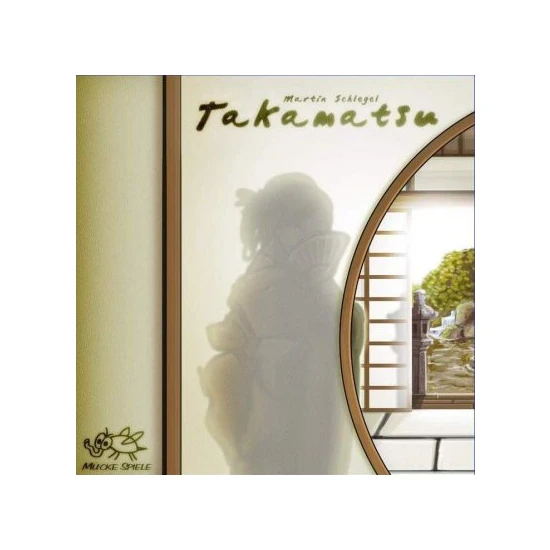
Takamatsu
Editore: Mücke Spiele
 Vuoi vendere la tua copia di questo gioco?

Usa il nostro marketplace utrade!
Takamatsu
Contattaci
Condividi su
L'articolo non è disponibile, puoi utilizzare il nostro sistema di notifica per sapere quando sarà nuovamente ordinabile.
IMMAGINI SU BGG
Queste foto sono di proprietà di boardgamegeek.com e non si riferiscono specificatamente all'edizione di questa pagina.


 Bustine per le carte in questo gioco
23 carte: 45.0mm di larghezza e 90.0mm di altezza (45.0x90.0)
Non ci sono bustine disponibili per questo formato.
 Descrizione
There's excitement in the capital as Shogun Tokugawa Ieyasu wants to assign the Han of Takamatsu in a challenge. The competing daimyos direct their samurai through the palace following simple rules and quickly see that they can use the samurai of the other daimyos for their purposes.
Takamatsu is a game of conflict and cooperation, with players trying to place (or not place!) their samurai in their own rooms. The palace consists of two circular paths that merge at one point, then separate once again. Players have 5-7 samurai that are split between two color-coded rooms at the start of the game, and a row of scoring cards — some face-down — are laid out next to the board.
On a turn, you choose a room that contains at least one of your samurai, then you move some number of samurai in this room clockwise from this space. If the room contains only one samurai, you can move it one space; if it contains two, you can move both two spaces or only one a single space — but if an opposing samurai is with you, then you must move both exactly two spaces. When a room has three or more samurai, he must leave at least one behind (while still needing to bring at least one opposing samurai along, if any). When a samurai ends movement in a room of the same color, that samurai's daimyo collects the topmost scoring card, with multiple scorings being possible on a turn. For each open scoring card collected, the player immediately adjusts his scoring marker — which could move you back on the track, so sometimes you want to escort another samurai to his pad instead of bringing him to your place.
When one player reaches twenty points, players finish the round, then tally their hidden scoring cards, if any. The player with the most points wins! (With two players, each daimyo controls two colors of samurai and must move an opposing samurai when possible. After one pagoda reaches the twenty point threshold, the players sum their two scores to determine a winner.)
 Ulteriori Informazioni
| Meccaniche: | Posizionamento lavoratori |
| Categorie: | Azione e Destrezza |
| Nomi alternativi: | |
| BARCODE: | 4280000153852 |
| In 22 wishlist In 6 collezioni È stato visto 7893 volte | |
Descrizione
There's excitement in the capital as Shogun Tokugawa Ieyasu wants to assign the Han of Takamatsu in a challenge. The competing daimyos direct their samurai through the palace following simple rules and quickly see that they can use the samurai of the other daimyos for their purposes.
Takamatsu is a game of conflict and cooperation, with players trying to place (or not place!) their samurai in their own rooms. The palace consists of two circular paths that merge at one point, then separate once again. Players have 5-7 samurai that are split between two color-coded rooms at the start of the game, and a row of scoring cards — some face-down — are laid out next to the board.
On a turn, you choose a room that contains at least one of your samurai, then you move some number of samurai in this room clockwise from this space. If the room contains only one samurai, you can move it one space; if it contains two, you can move both two spaces or only one a single space — but if an opposing samurai is with you, then you must move both exactly two spaces. When a room has three or more samurai, he must leave at least one behind (while still needing to bring at least one opposing samurai along, if any). When a samurai ends movement in a room of the same color, that samurai's daimyo collects the topmost scoring card, with multiple scorings being possible on a turn. For each open scoring card collected, the player immediately adjusts his scoring marker — which could move you back on the track, so sometimes you want to escort another samurai to his pad instead of bringing him to your place.
When one player reaches twenty points, players finish the round, then tally their hidden scoring cards, if any. The player with the most points wins! (With two players, each daimyo controls two colors of samurai and must move an opposing samurai when possible. After one pagoda reaches the twenty point threshold, the players sum their two scores to determine a winner.)
Bustine per le carte in questo gioco
23 carte: 45.0mm di larghezza e 90.0mm di altezza (45.0x90.0)
Non ci sono bustine disponibili per questo formato.
Ulteriori Informazioni
| Meccaniche: | Posizionamento lavoratori |
| Categorie: | Azione e Destrezza |
| Nomi alternativi: | |
| BARCODE: | 4280000153852 |
| In 22 wishlist In 6 collezioni È stato visto 7893 volte | |
 Spesso comprati insieme



ATTENZIONE! Non adatto ai bambini al di sotto dei 3 anni di età. Contiene piccole parti che potrebbero essere ingerite o inalate.