




|
|
|

3-5
45'
No necessary in-game text
|
Pala
Publisher: Cambridge Games Factory
 Do you want to sell your copy of this game?

Use our marketplace utrade!
Pala
Contact us
Share on
The item is not available, you can use the alert to be notified when it will be back in stock.
PICTURES ON BGG
These photos are the property of boardgamegeek.com and do not refer specifically to the edition on this page.









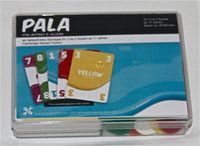
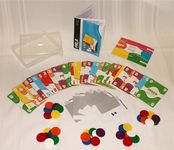


 Card sleeves in this game
48 cards of 62.0mm width and 87.0mm of height
1x
(50 Pcs)
1x
(100 Pcs)
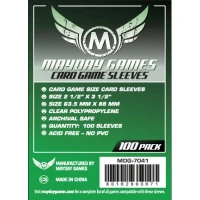
1x
(100 Pcs)
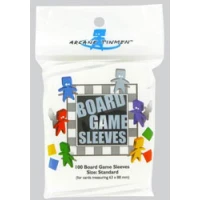
1x
(100 Pcs)
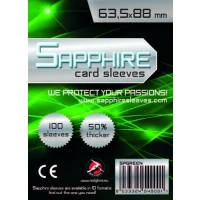
1x
(100 Pcs)
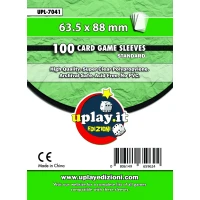
1x
(110 Pcs)
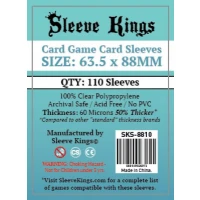
1x
(75 Pcs)
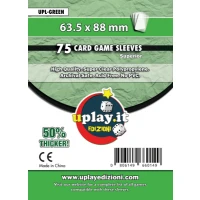
1x
(50 Pcs)
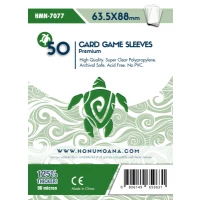
1x
(75 Pcs)
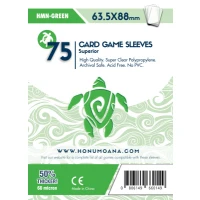
1x
(100 Pcs)
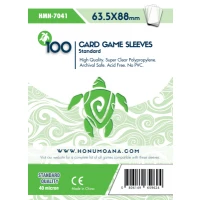
1x
(100 Pcs)

 Description
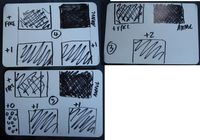
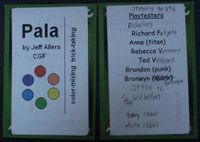
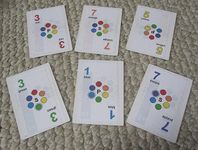
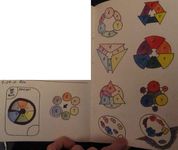
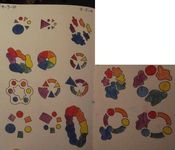
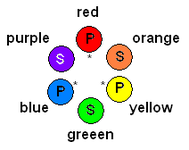
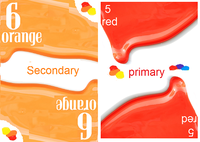
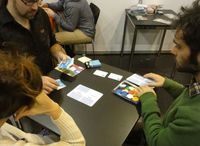
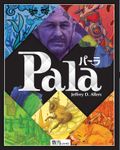
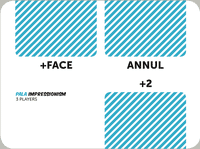
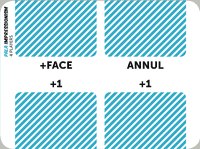
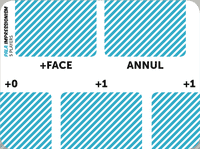
In the trick-taking card game Pala, players are art students who are learning to mix their pigments on the palette to get the right color for their canvases. The cards are the paint colors, and the palette is the table. By playing cards together (that is, mixing colors), you can effectively change the color of your cards as well as the trick itself.
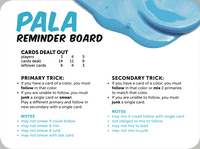
The published version of Pala includes two ways to play. Both variants use the same mechanisms for playing tricks, but have different bidding and score rules. Thus, once you wrap your head around the basics of the game, you can play two wildly different games with those core rules.
In Impressionism, players collectively determine the value of different colors (suits) by discarding cards from their hands before the round begins. Points are bad, analogous to Hearts.
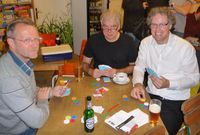
In Pointillism, players bid with colored chips to indicate the colors they expect to win, but over-bidding risks losing all your points for the round. Points are good, analogous to Spades.
The published version of Pala includes two ways to play. Both variants use the same mechanisms for playing tricks, but have different bidding and score rules. Thus, once you wrap your head around the basics of the game, you can play two wildly different games with those core rules.
In Impressionism, players collectively determine the value of different colors (suits) by discarding cards from their hands before the round begins. Points are bad, analogous to Hearts.
In Pointillism, players bid with colored chips to indicate the colors they expect to win, but over-bidding risks losing all your points for the round. Points are good, analogous to Spades.
 Additional information
| Mechanics: | Betting/Wagering Pattern Recognition |
| Categories: | Card Games |
| Alternative names: | |
| BARCODE: | NOEAN_5229 |
| In 1 wishlist This was seen 6204 times | |
Description
In the trick-taking card game Pala, players are art students who are learning to mix their pigments on the palette to get the right color for their canvases. The cards are the paint colors, and the palette is the table. By playing cards together (that is, mixing colors), you can effectively change the color of your cards as well as the trick itself.
The published version of Pala includes two ways to play. Both variants use the same mechanisms for playing tricks, but have different bidding and score rules. Thus, once you wrap your head around the basics of the game, you can play two wildly different games with those core rules.
In Impressionism, players collectively determine the value of different colors (suits) by discarding cards from their hands before the round begins. Points are bad, analogous to Hearts.
In Pointillism, players bid with colored chips to indicate the colors they expect to win, but over-bidding risks losing all your points for the round. Points are good, analogous to Spades.
The published version of Pala includes two ways to play. Both variants use the same mechanisms for playing tricks, but have different bidding and score rules. Thus, once you wrap your head around the basics of the game, you can play two wildly different games with those core rules.
In Impressionism, players collectively determine the value of different colors (suits) by discarding cards from their hands before the round begins. Points are bad, analogous to Hearts.
In Pointillism, players bid with colored chips to indicate the colors they expect to win, but over-bidding risks losing all your points for the round. Points are good, analogous to Spades.
Card sleeves in this game
48 cards of 62.0mm width and 87.0mm of height
1x
(50 Pcs)
1x
(100 Pcs)
1x
(100 Pcs)
1x
(100 Pcs)
1x
(100 Pcs)
1x
(110 Pcs)
1x
(75 Pcs)
1x
(50 Pcs)
1x
(75 Pcs)
1x
(100 Pcs)
1x
(100 Pcs)
Additional information
| Mechanics: | Betting/Wagering Pattern Recognition |
| Categories: | Card Games |
| Alternative names: | |
| BARCODE: | NOEAN_5229 |
| In 1 wishlist This was seen 6204 times | |

CAUTION! Not suitable for children under 3 years of age. It contains small parts which could be swallowed or inhaled.