

-
Wybierz język strony
-
 Deutsch
DE
Deutsch
DE
-
 English
EN
English
EN
-
 Français
FR
Français
FR
-
 Español
ES
Español
ES
-
 Italiano
IT
Italiano
IT
-
 Polski
PL
Polski
PL
-
 Português
PT
Português
PT
-
Wyślij do


-
Wybierz język strony
-
Deutsch
DE
-
English
EN
-
Français
FR
-
Español
ES
-
Italiano
IT
-
Polski
PL
-
Português
PT
-
Wyślij do


 (+39) 320 073 4588
 SKONTAKTUJ SIĘ Z NAMI PRZEZ E-MAIL
-
Wybierz język strony
-
Deutsch
DE
-
English
EN
-
Français
FR
-
Español
ES
-
Italiano
IT
-
Polski
PL
-
Português
PT
-
Wyślij do

-
Menu

-
Rankingi

-
Gry planszowe

-
RPG

-
Party

-
GDC

-
Akcesoria

-
Lego

-
Książki

-
Komiksy



|
|
|
|
2-4
30'
10
Niezależny od języka
|
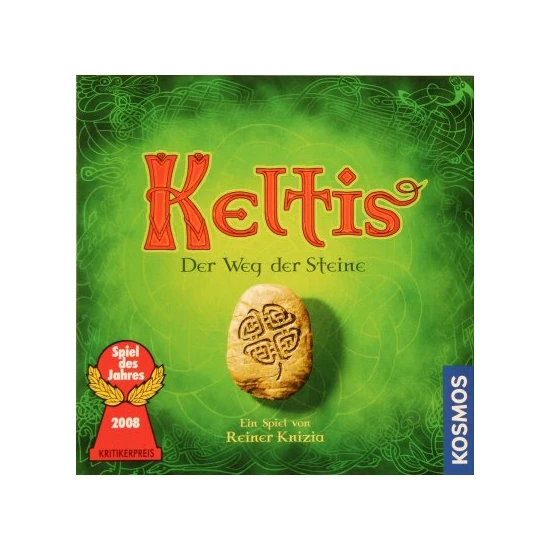
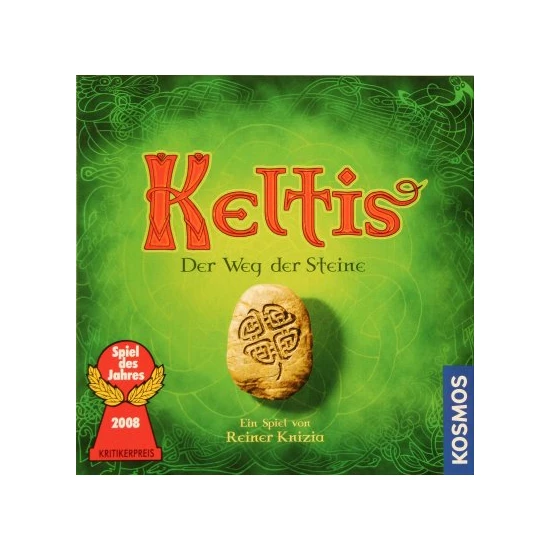
Keltis - Il Sentiero di Pietra
Wydawca: Stupor Mundi

 Czy chcesz sprzedać swój egzemplarz tej gry?

Skorzystaj z naszego rynku utrade!
Keltis - Il Sentiero di Pietra
Skontaktuj się z nami
udostępnij
Artykuł nie jest dostępny. Możesz skorzystać z naszego systemu powiadomień e-mailowych, aby dowiedzieć się, kiedy będzie można go ponownie zamówić.
ZDJĘCIA NA BGG
bggpicszastrzeżenie


 Rękawy na karty w tej grze
Karty 110: 59.0mm szerokie i 91.0mm wysokie (59.0x91.0)
3x
(50 Pz)

2x
(100 Pz)

3x
(50 Pz)

2x
(100 Pz)

2x
(100 Pz)

3x
(50 Pz)
2x
(100 Pz)

2x
(100 Pz)

1x
(110 Pz)
2x
(75 Pz)

3x
(50 Pz)

2x
(75 Pz)

2x
(100 Pz)

 Opis
Opis
Keltis is a multi-player game that takes its mechanisms from Knizia's Lost Cities card game. Players play cards to move their playing pieces along stone paths. Cards show one of five different colors/symbols, each corresponding to one path; in addition, each card shows a number (0-10, twice each). In each color, each player can play his cards in either ascending or descending order. As in Lost Cities, it's better to concentrate on a few paths since the final spaces on a path grant high points, but ending early gives negative ones.
The active player plays one card (out of a hand of eight) or discards one, then moves the corresponding playing piece on the path. Many of the spaces have a token that grants some bonus: either immediate points (counted on the scoring track), an extra move on a path, or wishing stones that are needed at game end to avoid negative points.
The game ends when five playing pieces (from any combination of players) have reached the seventh (or higher) space on their respective paths. Now, scoring happens:
Pieces which moved only 1-3 steps earn negative points (-4, -3, -2).
Pieces with 4+ steps earn points (1, 2, 3, 6, 7, 10).
One piece of each player twice the height of other pieces and scores double, either positive or negative.
Holding fewer than two wish stones earns negative points (-3 / -4), while a collection of five or more stones yields a bonus of 10 points.
All endgame points are added to any scored during the game. The player with the highest score wins!
 Dalsze informacje
| Mechanika: | Ręczne zarządzanie kartami Kolekcja zbiorów obiektów |
| Kategorie: | Gry karciane Wyścig |
| Alternatywne nazwy: | Keltis Keltis La Voie De La Pierre Κέλτες 圣石之路 (聖石之路) 켈티스 Keltis Keltis: Der Weg der Steine Κέλτες 圣石之路 (聖石之路) 켈티스 |
| BARCODE: | 8033772893077 |
| Na liście życzeń 30__TOK_1__ W kolekcjach 43__TOK_1__ Obejrzano go 13880__TOK_1__ razy | |
Opis
Keltis is a multi-player game that takes its mechanisms from Knizia's Lost Cities card game. Players play cards to move their playing pieces along stone paths. Cards show one of five different colors/symbols, each corresponding to one path; in addition, each card shows a number (0-10, twice each). In each color, each player can play his cards in either ascending or descending order. As in Lost Cities, it's better to concentrate on a few paths since the final spaces on a path grant high points, but ending early gives negative ones.
The active player plays one card (out of a hand of eight) or discards one, then moves the corresponding playing piece on the path. Many of the spaces have a token that grants some bonus: either immediate points (counted on the scoring track), an extra move on a path, or wishing stones that are needed at game end to avoid negative points.
The game ends when five playing pieces (from any combination of players) have reached the seventh (or higher) space on their respective paths. Now, scoring happens:
Pieces which moved only 1-3 steps earn negative points (-4, -3, -2).
Pieces with 4+ steps earn points (1, 2, 3, 6, 7, 10).
One piece of each player twice the height of other pieces and scores double, either positive or negative.
Holding fewer than two wish stones earns negative points (-3 / -4), while a collection of five or more stones yields a bonus of 10 points.
All endgame points are added to any scored during the game. The player with the highest score wins!
Rękawy na karty w tej grze
Karty 110: 59.0mm szerokie i 91.0mm wysokie (59.0x91.0)
3x
(50 Pz)
2x
(100 Pz)
3x
(50 Pz)
2x
(100 Pz)
2x
(100 Pz)
3x
(50 Pz)
2x
(100 Pz)
2x
(100 Pz)
1x
(110 Pz)
2x
(75 Pz)
3x
(50 Pz)
2x
(75 Pz)
2x
(100 Pz)
Dalsze informacje
| Mechanika: | Ręczne zarządzanie kartami Kolekcja zbiorów obiektów |
| Kategorie: | Gry karciane Wyścig |
| Alternatywne nazwy: | Keltis Keltis La Voie De La Pierre Κέλτες 圣石之路 (聖石之路) 켈티스 Keltis Keltis: Der Weg der Steine Κέλτες 圣石之路 (聖石之路) 켈티스 |
| BARCODE: | 8033772893077 |
| Na liście życzeń 30__TOK_1__ W kolekcjach 43__TOK_1__ Obejrzano go 13880__TOK_1__ razy | |
 Często kupowane razem

 Inne wersje

UWAGA! Nie nadaje się dla dzieci poniżej 3 roku życia. Zawiera małe części, które mogą zostać połknięte lub wdychane.